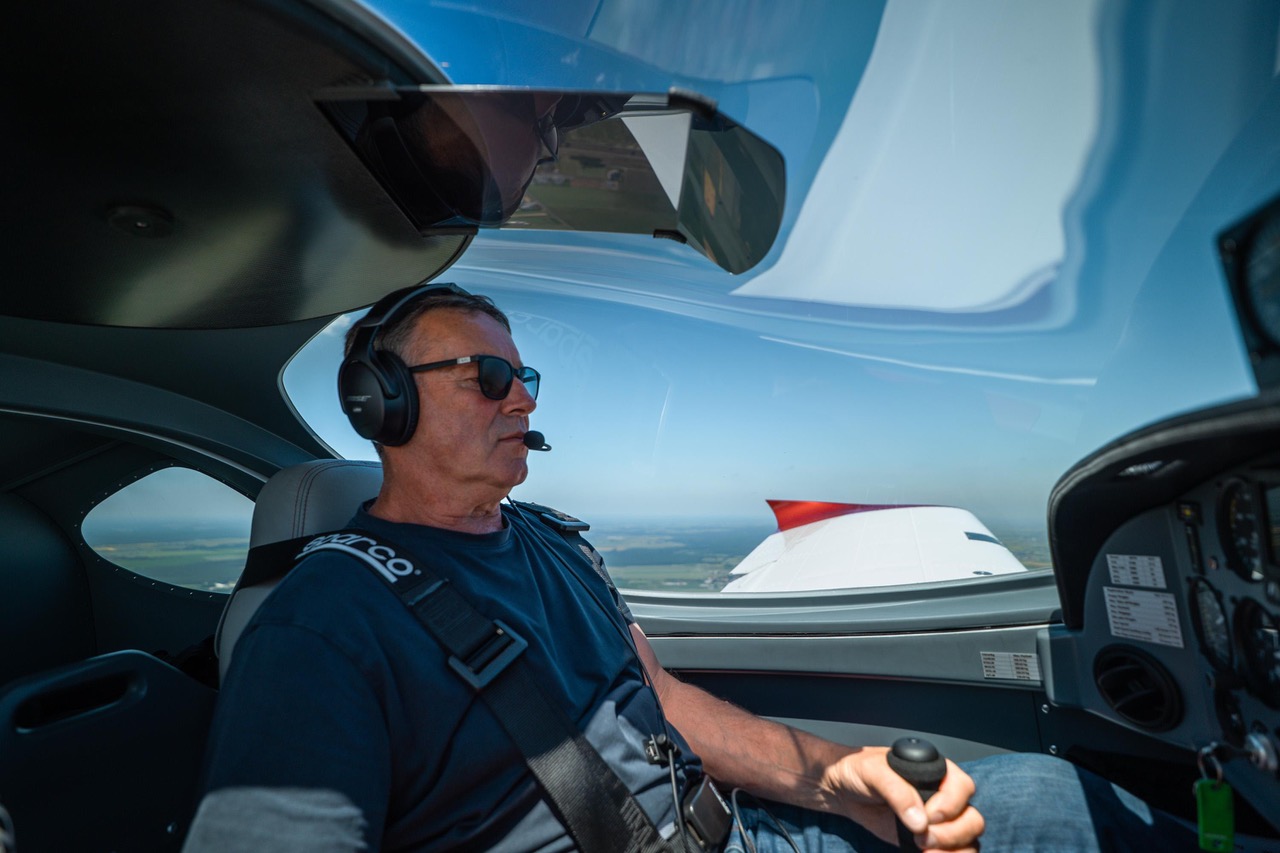
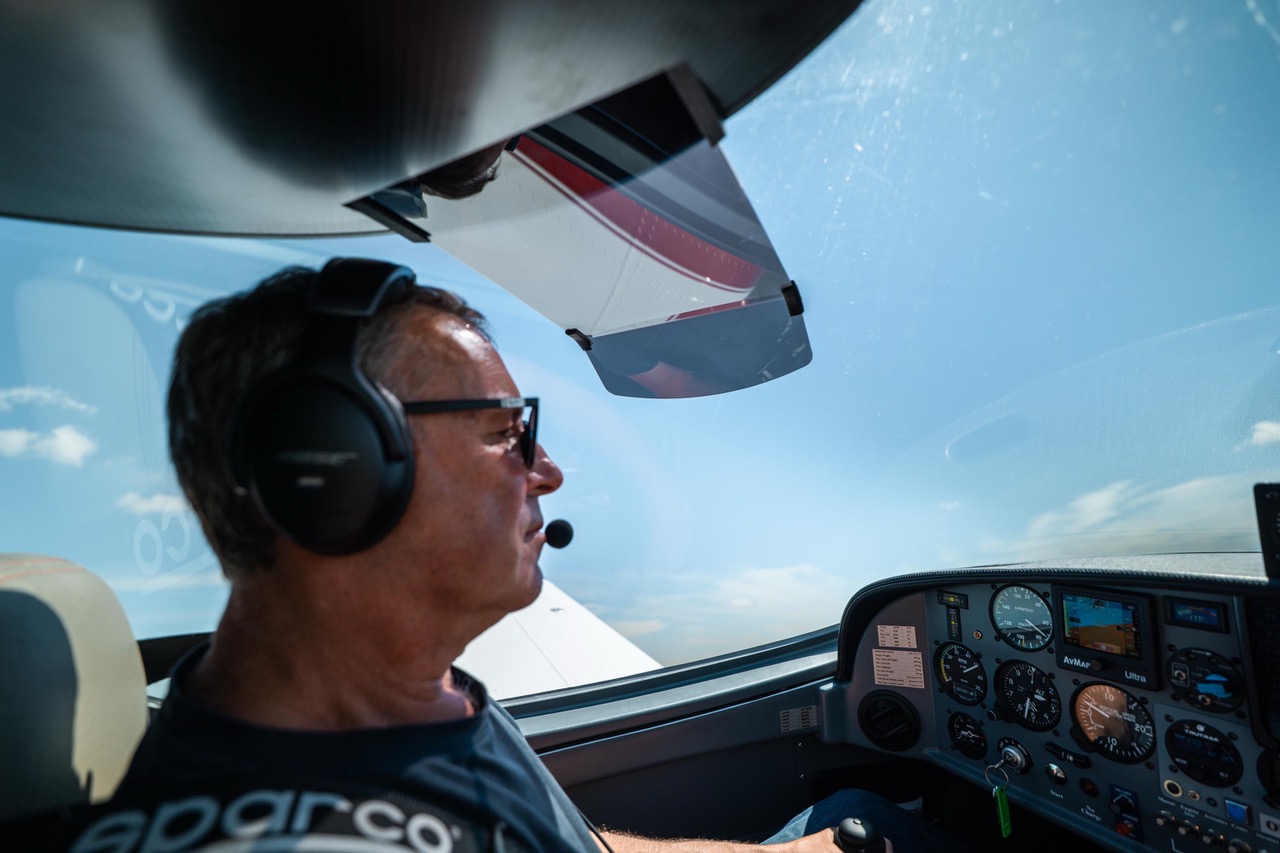
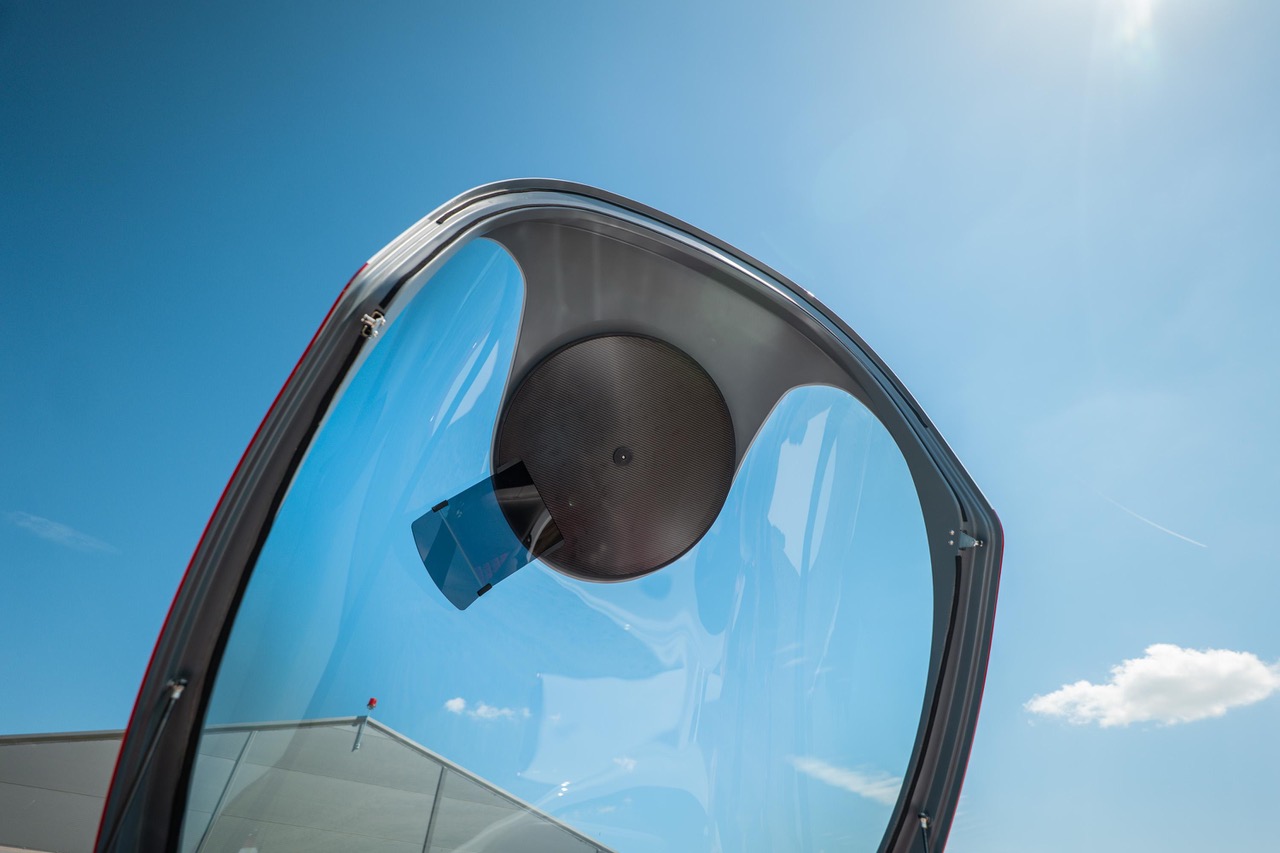
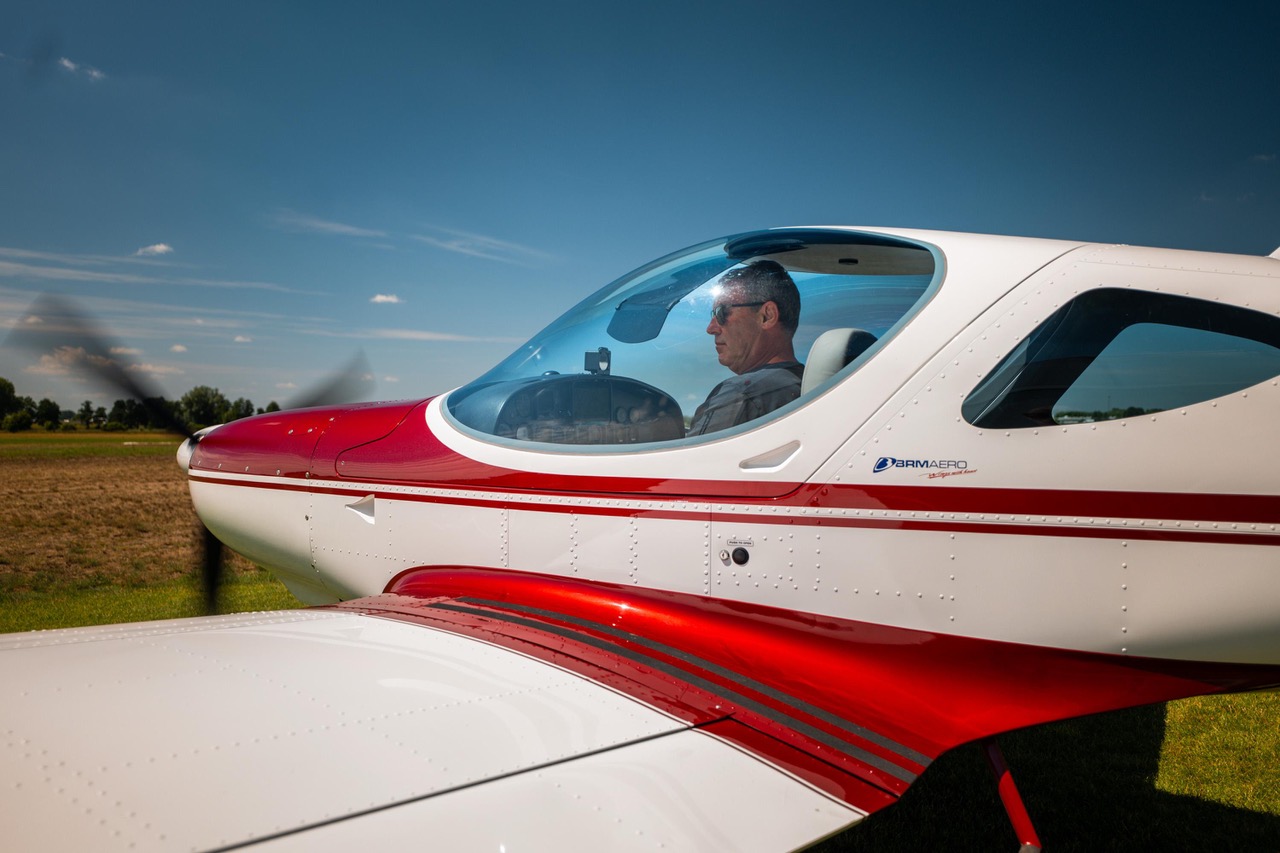
A carbon-fiber sun visor engineered precisely to the curve of the Bristell canopy — designed by a flight instructor, proven over two years and a 30-hour flight expedition through the Tunisian heat.
The Bristell's panoramic canopy gives you visibility few aircraft can match — and a greenhouse on every sunny day. The Q Sun Visor fixes exactly that, without touching the airframe.
Instant, adjustable shade exactly where the sun is — no more squinting through a climb-out or holding a chart against the canopy on a westbound leg.
Noticeably lower cockpit temperature on long cross-country legs — verified over a 30-hour flight expedition through the non-stop heat of Tunisia.
Shields your glass panel and interior from direct sun on the ramp and in cruise — less heat soak, less UV, longer-lasting screens and trim.
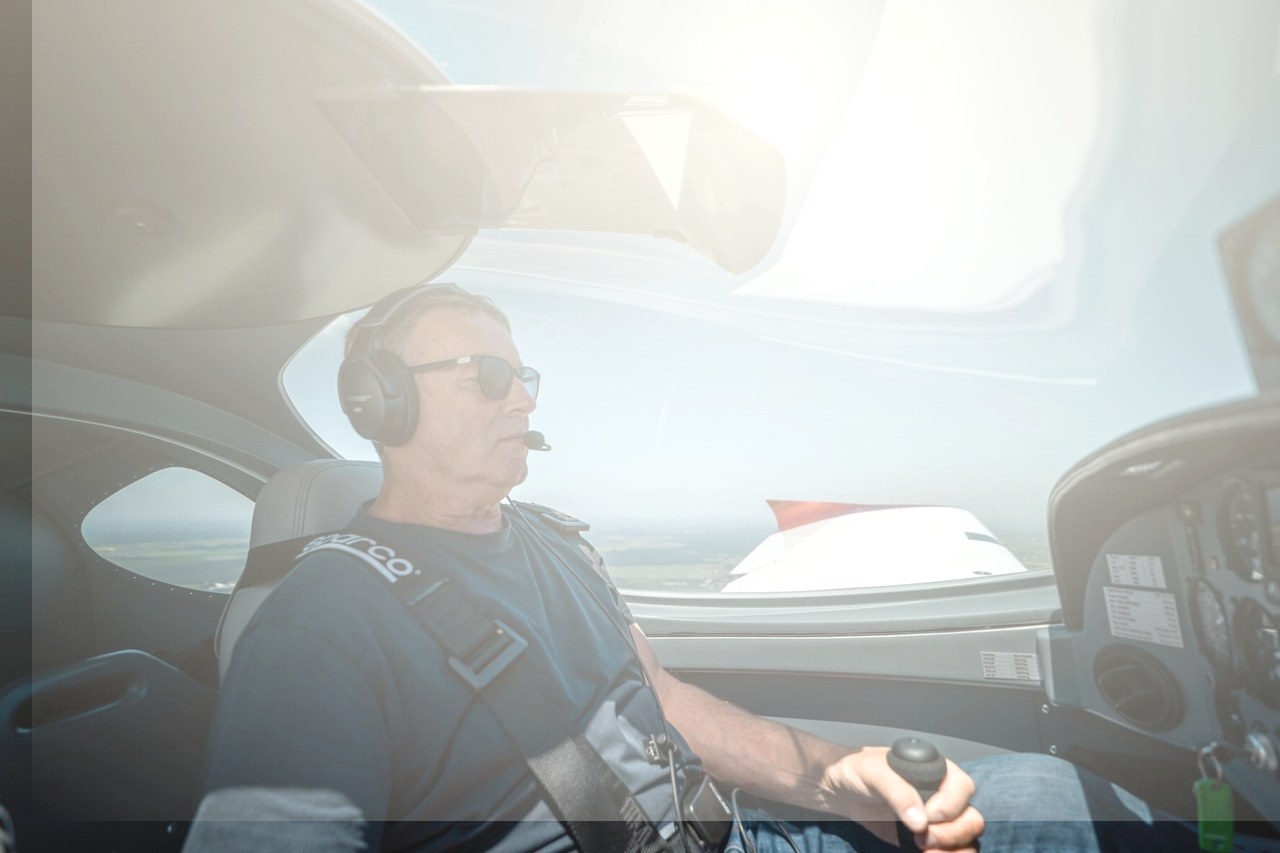
Without visor With Q Sun Visor Drag to compare — the same cockpit, with and without the Q Sun Visor.
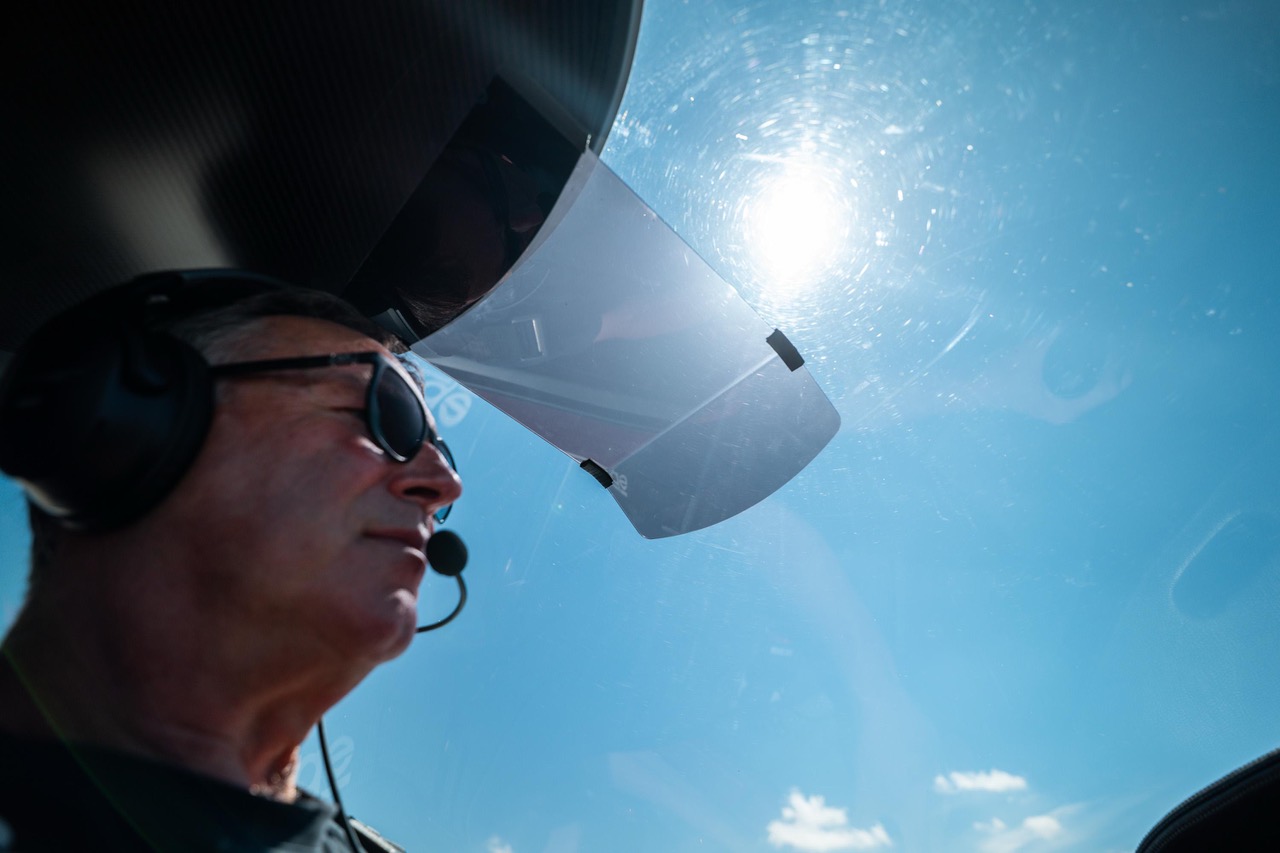
Two years of refinement in the designer's own NG5 — shaped to the exact curve of the canopy, tuned for the light you actually fly in.
“Having flown about 60 hours with the Q Sun Visor, I honestly can't remember how I flew without it. It's the first thing I reach for on every flight.”
— Bristell NG5 owner · 60 h with the visor
“Tested through a rigorous 30-hour flight expedition in the Tunisian heat. The reduction in temperature and glare inside the B23 was outstanding — a flawless, rock-solid upgrade for serious touring.”
— Bristell B23 owner · North Africa expedition
The response from the factory was immediate — enthusiastic interest within days from the people who build these aircraft for a living, and a hands-on technical review of the design itself.
Backed by that reception, and by two years of rigorous testing on my own aircraft, I decided to bring this precision accessory directly to the global community of Bristell owners — built by hand, one at a time.
Word travelled further, too: during a fly-in at Leszno, a Bristell dealer stopped by — and by the next morning, his own B23 was flying out with a Q Sun Visor freshly installed, now part of his demonstration fleet.
Personal enthusiasm from within the Bristell community · SkyDream demo fleet
| Materials | Pure carbon fiber + nylon-carbon composite (PA12-CF15) — rated -40°C to 170°C |
| Build time | ~70 h 3D printing · 15 h hand assembly |
| Fits | NG5 · LSA · HD · B23 · RG · TDO |
| Not compatible | High-wing B8 |
| Installation | No airframe modification · DIY or free fly-in install |
| Shipping | Protective box ~80 × 100 cm · 5 kg · worldwide |
I've spent over 40 years flying — several thousand hours in airplanes, more than a thousand in gliders, and six years competing with the Polish National Precision Flying Team. For most of that time I flew high-wing aircraft, so glare was never my problem.
Then I bought a Bristell NG5. The canopy is magnificent — and none of the sun-shade solutions I found matched the quality of the aircraft itself. So I designed one that does, refined it over two years in my own cockpit, and now build each unit by hand.
This is a request, not a payment. You'll get a personal reply within 48 hours confirming compatibility, your slot, and exact shipping to your location.
No. The visor is shaped to the Bristell canopy and mounts without drilling, adhesives on the acrylic, or permanent changes to the airframe. It attaches to the canopy roof with heavy-duty 3M™ Dual Lock™ mushroom-head fasteners — you can fit and remove it as easily as a GoPro or RAM mount..
The visor is designed around normal canopy operation and partly stows when not in use — you can rotate it back, out of the way, where it's almost unnoticeable to pilot and passenger. It doesn't intrude on your view through the glass: the main body sits inside the roof's curve and lowers the headliner by about 12 mm — negligible even at 186 cm (6'1") tall. The canopy's gas struts handle the small extra weight easily. It was refined over two years of flying in the designer's own NG5.
The visor combines pure carbon fiber with a nylon-carbon composite (PA12-CF15) — the same class of material used in demanding industrial and aerospace applications. It's cold-resistant down to -40°C and handles continuous use up to 110-120°C without issue, with short-term peak resistance up to 170°C. It's been tested through a rigorous 30-hour flight expedition in the Tunisian heat, with no measurable effect on shape, rigidity, or performance.
Each unit takes roughly 70 hours of 3D printing and 15 hours of hand assembly, with 3–4 built per month. Your confirmation email will state the exact slot and estimated ship date.
The €1,500 price excludes VAT. Orders shipped outside the EU are exported without Polish VAT; your country may charge import duty or local tax on arrival.